
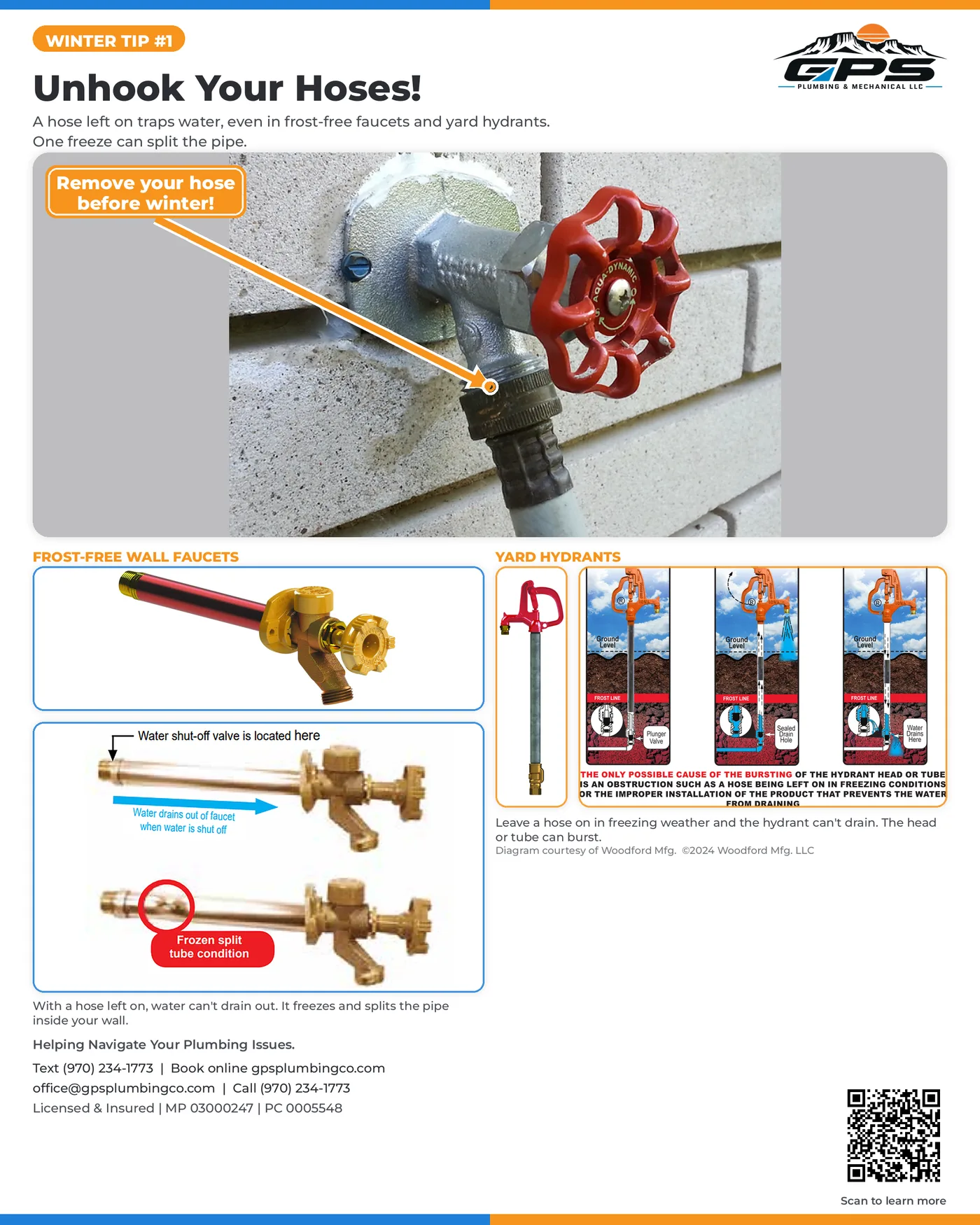
It takes one forgotten hose. A garden hose left on an outdoor faucet traps water in the faucet, and when the temperature drops, that water freezes and expands. Frost-free faucets and yard hydrants are built to resist freezing, but only if they can drain. A hose that stays attached keeps them from draining.
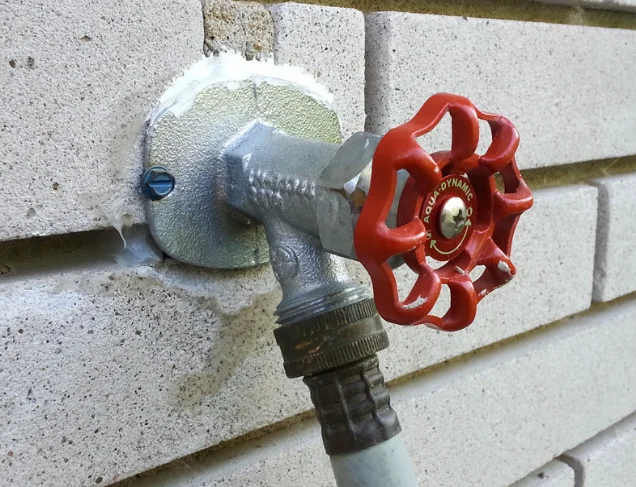
Why a hose causes the damage
Water expands about 9 percent when it freezes, and a pipe or valve body cannot stretch to make room. With a hose attached, water stays in the spout and the tube behind it. When it freezes, the ice can split the tube. You often will not see anything wrong until spring, when you turn the water on and it leaks into the wall instead of out of the spigot.
Hose-end gear causes the same problem: splitters, spray nozzles, timers and anything else screwed onto the spout. Take all of it off, not just the hose.
Frost-free wall faucets
A frost-free faucet has a long tube that runs back through the wall. The shut-off valve sits at the far end of the tube, inside the warm part of the house, so the water stops where it cannot freeze. When you close the faucet, the water left in the tube drains out through the spout, as long as nothing is blocking it.
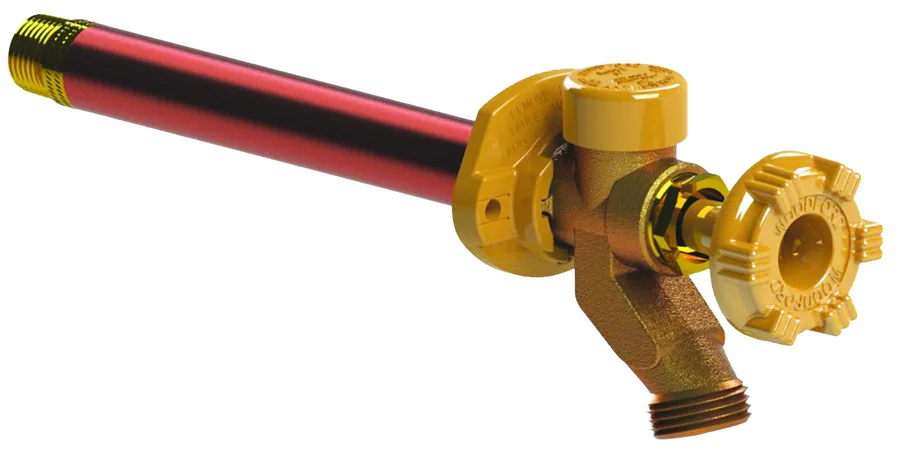
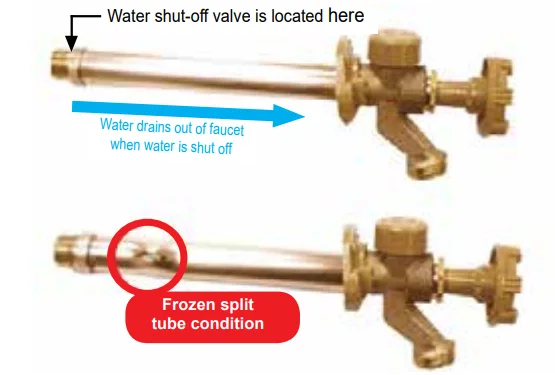
Two details matter for these faucets. First, the faucet has to be installed with a slight downward slope toward the outside, so the water can run out. Second, a hose or anything else on the spout stops that drain. If either one is wrong, the tube holds water and can freeze.
Yard hydrants
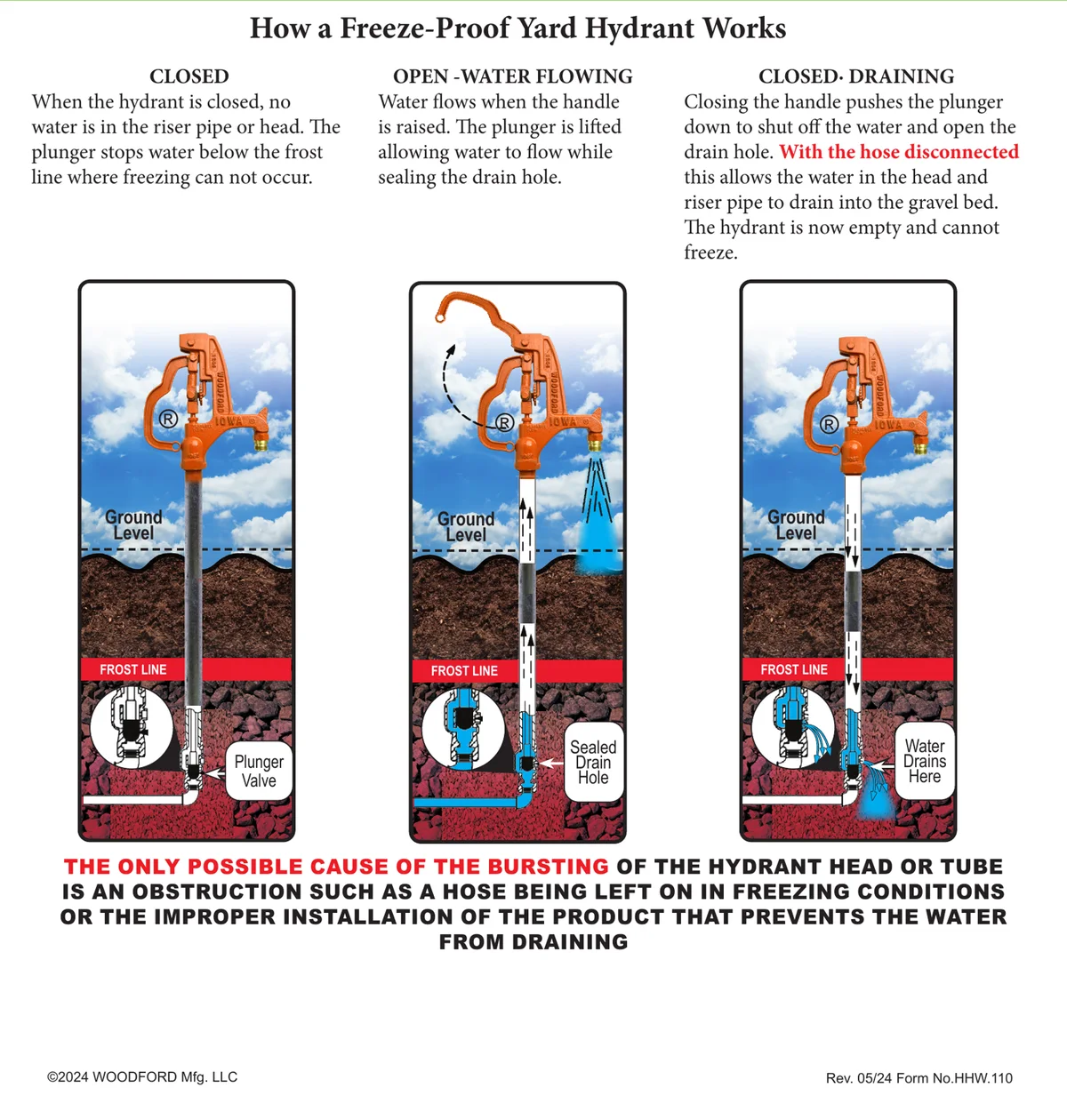
A yard hydrant is the tall faucet you see out in a yard, near a barn, a shop or a corral. It is built differently. The valve (a plunger) sits deep underground, below the frost line. When you lift the handle, the valve opens and water rises up the pipe. When you push the handle down, the valve closes and a small drain hole opens at the bottom, so the water in the pipe drains into the gravel below.
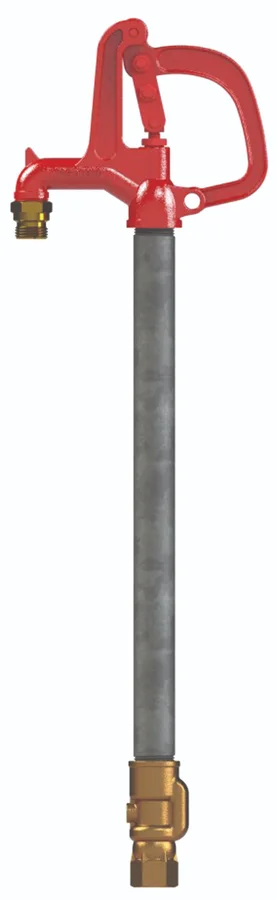
The hydrant can only drain if air can get in at the top and nothing is blocking the spout. With a hose attached, the water stays in the head and pipe above the ground, and a hard freeze can crack the head or tube.
The manufacturer's diagram below shows the three stages: closed, open, and closed and draining. The manufacturer states that the only things that cause the head or tube to burst are an obstruction, such as a hose left on in freezing conditions, or an installation that stops the water from draining.
These are common on farms and rural properties, where lines run to barns, shops and stock tanks.
Your before-winter checklist
- Do it before the first hard freeze. In the Grand Valley, that can come in October or November, so do not wait for the forecast to look scary.
- Take off every hose and any splitter, nozzle or timer. Drain the hose and store it for the winter.
- Check that each faucet or hydrant drains. After you close a frost-free faucet or hydrant, a little water should run out. If it keeps dripping, or the head stays wet, it may not be draining properly. Call us before it freezes.
- Look for older faucets. A standard outdoor spigot without a long tube is not freeze-proof. If you have an inside shut-off valve for it, close that valve and open the outdoor spigot so it can drain.
- Insulated covers are optional extra protection. They help a little in a cold snap, but they are no substitute for removing the hose.
- Remember the shop and the barn. Outbuildings and rarely used faucets are the ones people forget.
How to tell if one has already split
A split frost-free faucet usually looks fine until you turn it on. In spring, open it slowly and watch. Signs of a split tube include:
- Water leaking inside the wall, or damp drywall or a wet spot on the ceiling or wall near the faucet
- A wet or dripping area in the basement or crawlspace under the faucet
- Water that seems to run from somewhere other than the spout, or weak flow at the spout
- A yard hydrant that gushes, leaks at the head, or will not shut off
If you see any of these, shut the faucet off, then close the water supply to it if you can, and call us. A split tube is repaired by replacing the faucet or hydrant. See our pages on faucet and hose bib repair and leak repair.
Print or share this tip
We made a one-page version you can print for the shop or send to a neighbor. Open the flyer.
For other freeze risks, read our guide to keeping pipes from freezing, and see heat tape and pipe freeze protection for lines that run through cold spaces.
General information only. This page is general advice and does not replace a licensed professional looking at your equipment. Plumbing, heating and cooling work, and work on a roof, can cause property damage or injury if it is done incorrectly. Follow the manufacturer's instructions and local codes, and if you are not sure, call a licensed professional. GPS Plumbing & Mechanical LLC is not responsible for damage or injury that results from using the information on this page.
Not sure your faucet or hydrant drains, or worried one already split?
We can look at it, replace a damaged faucet or hydrant, and fix leaks before they do real damage.
Call (970) 234-1773 Or request service online