Furnace Repair & Heating in Grand Junction, CO
Furnace repair, maintenance, and no-heat calls for forced-air heating systems across the Grand Junction valley.
When a furnace stops keeping up, it's rarely convenient timing. GPS Plumbing & Mechanical diagnoses and repairs forced-air furnace issues, including ignition problems, blower motor failures, thermostat issues, and everything in between, and handles the seasonal maintenance that keeps a furnace from failing in the first place.
We also install and program new thermostats and run full system diagnostics if you're not sure what's wrong, just that something is.
Serving Grand Junction, Fruita, Palisade, Clifton, Delta, Montrose, and the rest of Mesa County.
What's included
- Furnace repair
- Ignition & pilot issues
- Blower motor repair
- Thermostat installation
- No-heat calls
- Filter & maintenance service
- System diagnostics
Signs you need this
- The furnace won't turn on, or shuts off shortly after starting
- It's blowing cold or lukewarm air instead of heat
- Strange noises (banging, screeching, or rattling) when it runs
- Heating bills climbing without a clear reason
- Uneven heat between rooms or floors
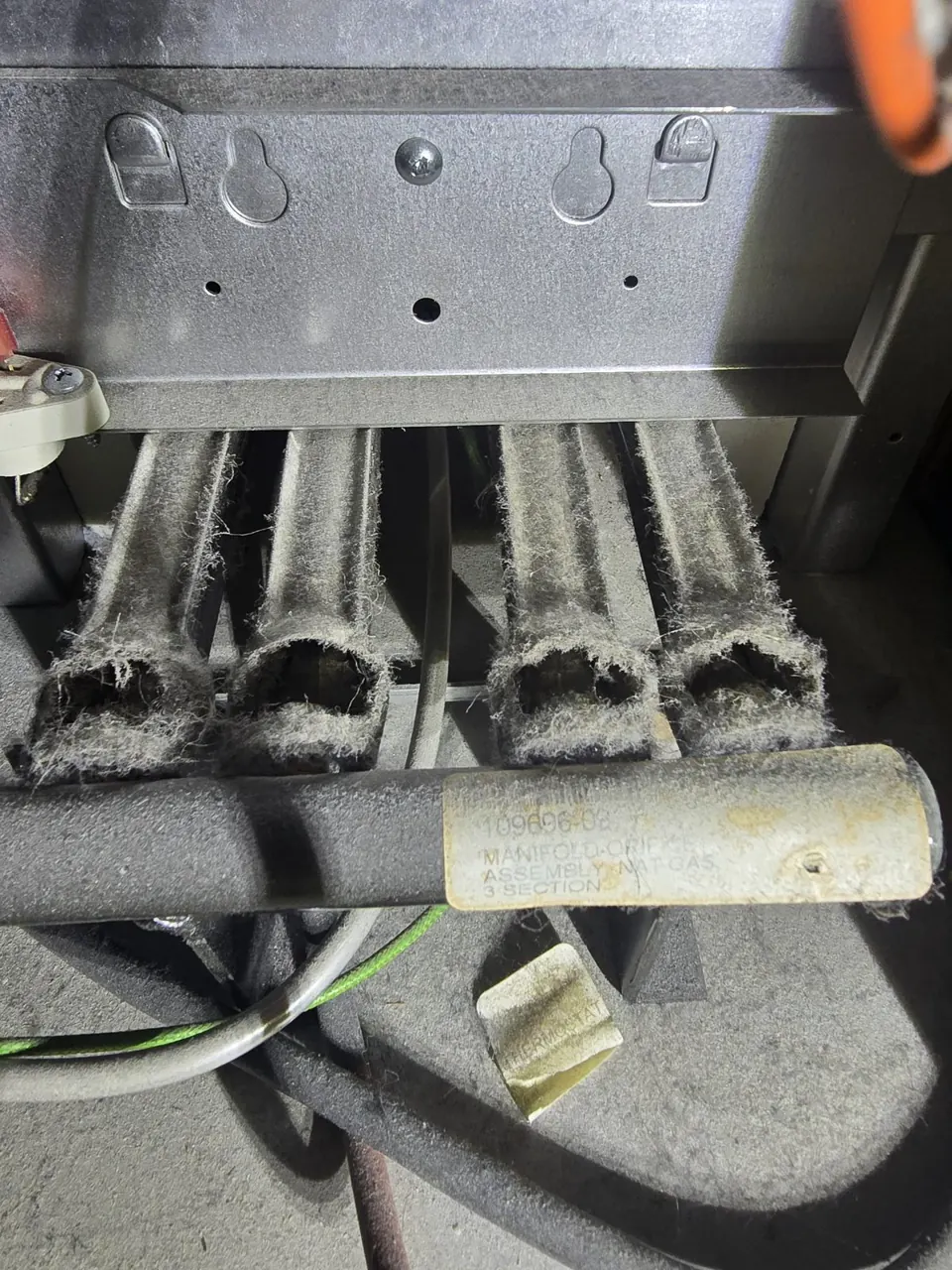
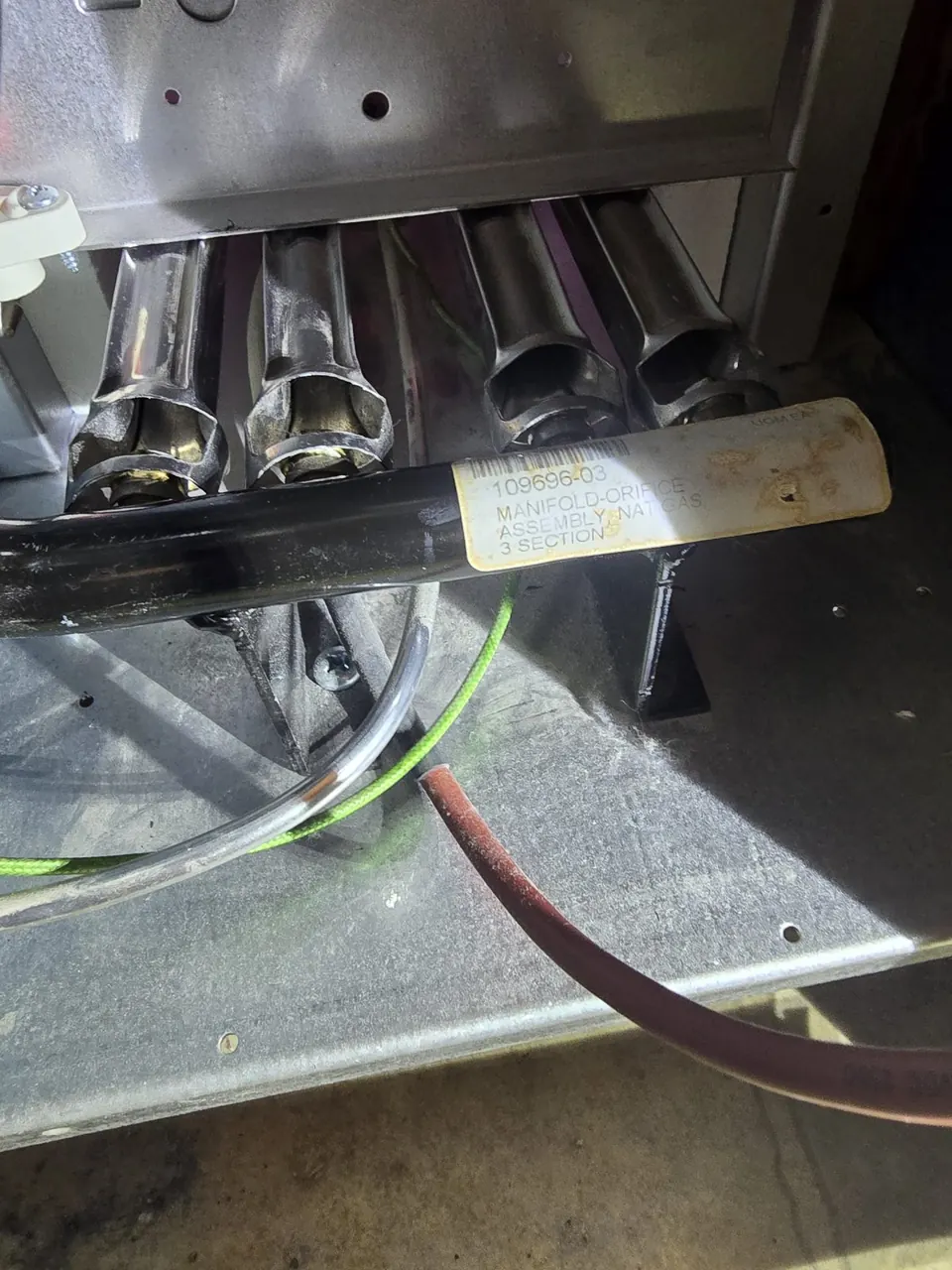
What a burner cleaning does
Dust and debris on furnace burners can cause weak or uneven flames and lead to ignition trouble. Cleaning them as part of a seasonal tune-up is one of the simplest ways to head off a no-heat call.
How a gas furnace works
Knowing the sequence helps you describe a problem accurately, and it explains why a furnace can fail in so many different ways.
- The thermostat calls for heat.
- The inducer fan starts and pulls air through the heat exchanger and out the vent. A pressure switch confirms it is working.
- The igniter heats up, the gas valve opens and the burners light.
- A flame sensor confirms there is a flame. If it does not sense one, the gas shuts off for safety.
- After the heat exchanger warms up, the blower starts and pushes warm air through the ducts.
- When the house is warm, the burners shut off and the blower runs a little longer to clear remaining heat.
A problem anywhere in that chain can stop the heat. The furnace is designed to shut down safely instead of running when something is wrong, so a furnace that cycles on and off or never starts is often protecting itself. That is useful information, and it is why it is worth finding the cause rather than resetting it repeatedly.
Common reasons a furnace stops heating
- Dirty flame sensor. A thin film on the sensor prevents it from sensing the flame, so the burners light and then shut off after a few seconds. It is one of the most common service calls.
- Failed igniter. Hot surface igniters wear out over time and can crack. The furnace tries to start but never lights.
- Clogged filter and restricted airflow. A dirty filter makes the furnace overheat, and the high-limit switch shuts it down.
- Pressure switch or inducer problems. A blocked vent, a failing inducer motor or a clogged condensate line on a high-efficiency furnace can stop the start-up.
- Blower motor or capacitor failure. The furnace lights but little or no warm air moves through the house, or the blower hums but does not start.
- Thermostat trouble. Dead batteries, wrong settings or a failed thermostat can look like a furnace failure.
- Control board faults. Boards can fail from age or power surges, and the blinking code on the board tells a technician where to start.
- Gas supply interruptions. A closed shut-off valve or a utility interruption.
Before you call, there are a few things you can safely check: the thermostat is set to heat and has power, the filter is not clogged, the furnace switch is on, and the breaker has not tripped. Do not try to light a furnace by hand or open sealed panels.
What a furnace tune-up covers
A good tune-up is a look at the whole system, not just a filter change. It is best done in early fall, before the first cold nights.
- Inspect and clean the burners and check the flame quality
- Clean the flame sensor and test the igniter
- Check the heat exchanger and venting for visible signs of damage, cracks, corrosion or blockage
- Inspect the blower motor, wheel and capacitor
- Check electrical connections and safety switches
- Test thermostat operation and the heating cycle
- Replace or check the filter and look at airflow
- Look for signs of combustion or venting trouble and check that you have working CO alarms
You can see what burner cleaning looks like in the photos above. A tune-up catches small problems while there is still time to schedule them, instead of finding out on the coldest night of the year.
Standard and high-efficiency furnaces
Furnaces are rated by AFUE, which is the share of fuel that becomes heat for your home instead of leaving up the vent. An older standard-efficiency furnace is often around 80 percent. A high-efficiency furnace is typically 90 percent or more.
The difference comes from a second heat exchanger that pulls more heat out of the exhaust. That makes the exhaust cool enough to vent through plastic pipe, and it produces condensate, a small amount of slightly acidic water that must drain away. In cold weather, a condensate line that runs through an unheated space can freeze and shut the furnace down. If you have a high-efficiency furnace and it fails during a cold snap, the condensate line is worth checking.
Moving from an 80 percent unit to a 90 percent unit changes more than the equipment: venting, combustion air and the drain all change. That is part of what goes into an estimate.
Carbon monoxide and furnace safety
Any appliance that burns fuel can produce carbon monoxide if it is not burning or venting correctly. CO has no smell, so you rely on detectors. Put a working CO alarm outside every sleeping area and on every level, and replace them according to the date printed on the device.
Warning signs on the furnace itself include soot around the unit, a yellow or flickering burner flame instead of a steady blue flame, a vent pipe that has pulled loose or is corroded, and moisture on windows. If a CO alarm sounds, get everyone outside and call 911 first, as described in the safety note at the top of this page.
A cracked heat exchanger is the repair that nobody wants to hear. If one is found, the furnace is usually not safe to keep running, and we will show you what we found and explain your options.
Filters, thermostats and comfort
The filter protects the blower and the heat exchanger from dust, and a higher-rated filter is not always better. Very dense filters can restrict airflow on a system that was not designed for them, which makes the furnace run hotter and shortens its life. Check the manual for the filter type and thickness it was designed for, and replace it on schedule.
A new thermostat can improve comfort and reduce wasted heat. Programmable and smart thermostats let you lower the temperature while you are out or asleep. Some need a common wire (C-wire) to power them, which we check before installing. If some rooms are always colder than others, the cause may be ductwork, closed registers or an airflow imbalance rather than the furnace itself.
Repair or replace a furnace
Many furnaces last 15 to 20 years with regular maintenance. Age, repair history and the specific failure all matter.
- Repair makes sense when the furnace is younger or otherwise healthy and the failed part is a normal wear item such as an igniter, flame sensor, capacitor or inducer.
- Replacement deserves a look when the furnace is near or past 15 to 20 years, the heat exchanger is cracked, repairs are happening every season, or the unit is a very old standard-efficiency model and your heating bills are high.
A common rule of thumb is that if a repair costs a large share of a new furnace and the unit is already old, replacement is the better value. We would rather you see both numbers than guess. Ask for a written estimate on the repair and the replacement, and financing is available for larger jobs.
Heating in Grand Junction: altitude and winter
January nights in Grand Junction average around 17°F, so heating is not optional, and a furnace failure is a real problem. Because the valley sits near 4,646 feet, gas furnaces also need to be set up for altitude. Manufacturers generally call for an input reduction above 2,000 feet, which is done with the right orifices or a pressure adjustment. A furnace installed or adjusted without that can burn poorly. If your furnace came from another region or was never tuned for altitude, a tune-up is a good time to ask.
If your home is heated with hot water instead of forced air, see our boiler repair page. If your furnace and water heater share a utility closet, our water heater page covers venting that is shared between them.
What affects the price
Prices depend on the details, so we don't quote blind. Every job gets a free written estimate before any work starts, so you know the cost up front. Diagnostics are free in the Grand Valley. Outside the Grand Valley, a $79.99 service call fee covers locations up to 50 miles from Grand Junction, plus $2 per one-way mile beyond that. The $79.99 is credited toward the work if you go ahead with the repair; the additional mileage is not credited. Here's what usually drives the cost:
- What failed: a flame sensor or igniter is a different job than a blower motor or control board
- The age and model of the furnace, which affects parts availability
- Whether a repair makes sense or the furnace is near the end of its life
- Any extra work such as thermostat or ductwork issues
How it works
Call or request service
Tell us what is going on and we will get you on the schedule.
We diagnose & quote
We diagnose the problem on site and give you a free written estimate.
We do the work
We complete the job, walk you through what we did, and warranty our labor for one year.
Furnace Repair & Heating questions
How often should I have my furnace serviced?
Once a year, ideally in early fall before you need it. A tune-up lets us clean and check the burners, ignition, and blower and catch worn parts while the weather is still mild.
Why is my furnace blowing cold air?
Common causes include an ignition or flame sensor problem, a thermostat set to run the fan only, a clogged filter or a safety switch that has tripped. If it won't produce heat, give us a call.
How long does a furnace last?
Many furnaces last about 15 to 20 years with regular maintenance. If yours is older and repairs are adding up, we'll help you compare repair and replacement costs.
How often should I change my furnace filter?
Check it monthly during heating season and replace it when it's dirty, typically every one to three months depending on the filter and your household. A clogged filter makes the furnace work harder.
Is the work warranted?
Our labor is warranted for one year. Parts and equipment are covered by the manufacturer's warranty. We do not cover or offer a warranty on customer-supplied material or equipment.
Free estimate. Financing available.
Free written estimates, straight answers, and a licensed contractor who shows up when promised. For bigger jobs, check your financing rate in a couple of minutes with no impact to your credit score.